


Use Bluwhale Bluprint to build a token unlock tracker around the event you want to understand. Create a focused research agent that brings together the scheduled release, recipient allocations and original documents for a token you want to understand. Set the task around one event and receive an organized explanation that keeps the details connected. Bluprint gives you a no-code route into public-source crypto research, so you can define the report around your priorities. Begin with the token and source material, then build a concise unlock review with the dates, amounts and references that matter to the task.
Build a focused unlock research task
Open Bluprint and sign in to Bluwhale. Define your token unlock tracker task, include the public sources you want the agent to use and request a focused research brief.
Define your token unlock tracker around one event
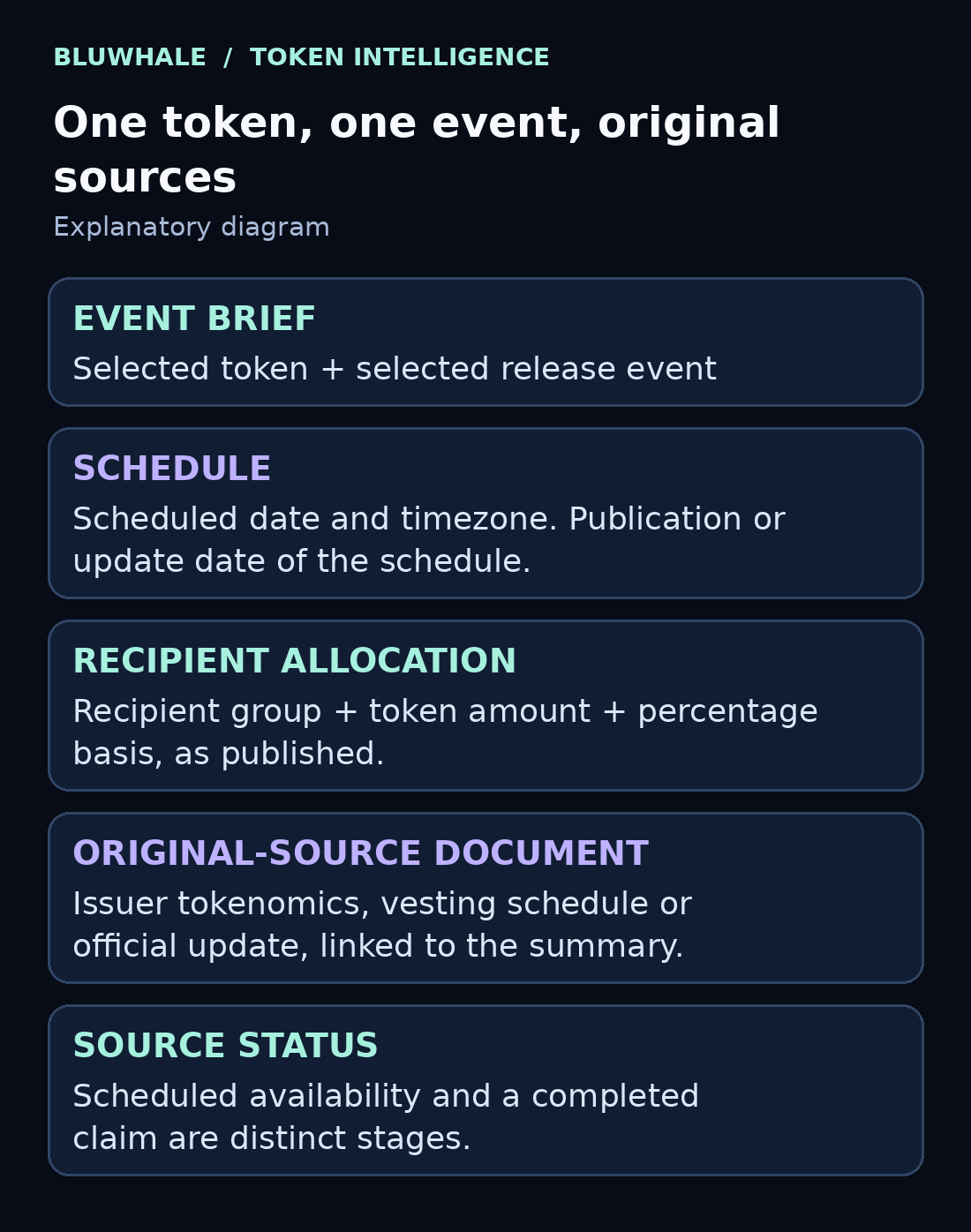
An unlock headline often compresses several details into a single date or number. A useful brief brings those details back together: which token is involved, what release the schedule describes, who receives the allocation and where the information was published.
Make that the agent’s job in Bluprint. Choose a token and the event you want to review, then define a short report that retains the schedule and source links. This keeps the research manageable and gives each section a clear purpose. You can focus on the release relevant to your work instead of assembling a general calendar of unrelated tokens.
The result is a reusable research task for your token unlock tracker, with a specific output: a clear summary of one scheduled event and the documents behind it.
Keep the event and schedule together
In your token unlock tracker, keep the event date with the source that describes it. Include the timezone when a source specifies a time, and retain the publication or update date of the schedule. These details make the brief easier to use when comparing announcements from different places or revisiting the event later.
Ask your token unlock research agent in Bluprint to name the token, identify the relevant release and summarize the token unlock schedule from the supplied public documents. Keep a later issuer update alongside the original schedule in your token unlock tracker when the terms change. A brief with clear dates is easier to revisit than a headline detached from its source.
This structure gives the report a useful reference point: what the source said about the event when the research was prepared.
See the allocation behind the release
The recipient allocation explains another part of the event. A release may relate to a team, investors, community programs or another category defined by the project. Keep the issuer’s labels with the token amount so the report describes the allocation as published.
Percentages in a token unlock tracker also need a clear basis. A share of total supply and a share of circulating supply use different denominators. Ask the agent to name that basis beside any percentage, with the token quantity kept visible. This makes the size of the scheduled release easier to understand and compare within the same report.
Bluprint lets you structure the review of token unlock allocations in the research instructions, giving the amount, recipient group and source a consistent place in the output.
Keep original sources close to the summary
A useful unlock brief is easy to trace. Keep the issuer’s tokenomics document, vesting schedule or official update beside the statement it supports. The reader can then move from the summary to the original wording without searching through a separate set of tabs.
Use your token unlock tracker in Bluprint to request concise sections with source links: event, amount, allocation and status. Include the date of the source and distinguish an original schedule from a later revision. This gives your research a practical structure that you can reuse when reviewing a different token or another release from the same project.
The value is a focused report shaped around your research task, with the supporting material kept within reach.
Distinguish the schedule from the release status
For your token unlock tracker, a vesting schedule describes when an allocation becomes available under its terms. A completed on-chain claim records an action that has occurred. Keep those stages distinct in the report, using a status label that matches the source being summarized.
Release patterns also differ in token vesting research. Tokenomist’s methodology separates discrete, non-daily cliff events from daily linear emissions. That distinction helps describe the type of schedule under review without treating every release as the same event. The project’s own documents supply the terms for the token you select.
For a scheduled event, preserve the scheduled label in your token unlock tracker. If your research includes a completed claim, keep its record in the relevant section. This makes the report clear about both timing and status.
Build the research task around the report you need
Give your token unlock tracker a concise instruction: review the selected token’s unlock event using the supplied official documents; return the date and timezone, token amount, recipient allocation, percentage basis and source links; distinguish the schedule from a completed claim. You define the scope and the format in Bluprint, then run the research when you need it.
Explore Bluwhale crypto research agents for the broader product view. Continue with token proxy upgrade analysis when your next task concerns a different change in the same project. Each research task gives a specific topic a clear output within the Bluwhale environment.
Build a focused unlock research task
Token unlock research questions
How do I distinguish a scheduled token unlock from a completed claim?
Use the event status supported by the original source and keep that status with its date. In a token unlock tracker built as a Bluwhale Bluprint research task, a published vesting schedule describes planned availability, while a completed claim has its own recorded action. Ask for separate status labels and source links so the brief explains both the schedule and any documented completion clearly.
Can a token unlock brief establish the token’s future price?
An unlock brief explains the release event, amount, recipient allocations and source schedule; it does not establish a future market price. Use Bluwhale Bluprint to organize those published details into a focused research answer. Keeping the amount, supply basis and recipient categories together helps you understand the event itself and decide which related tokenomics question deserves further research.
Where can I build a token unlock tracker with Bluwhale Bluprint?
Create the research task in Bluwhale Bluprint using natural-language instructions. Define the token and event, add the issuer documents or public sources you want used, and specify a brief with dates, amounts, allocations and source links. Bluwhale’s official creation guide provides a no-code research-agent route. Open the saved agent and request the report when you want to review that particular release.
What inputs make a token unlock research brief more useful?
Give your token unlock tracker the project’s tokenomics or vesting documents, the event you want examined and any relevant official update. In Bluwhale Bluprint, specify the token amount, recipient groups, timezone and percentage basis you want retained. Clear source instructions make the task specific, while a defined output format keeps the release date, allocation and references together in one useful research brief.
How should a token unlock brief compare recipient allocations?
Ask Bluwhale Bluprint to retain the project’s recipient labels, token amounts and the supply basis used for percentages. Your token unlock tracker can organize the research around the allocation described in the source, then explain how the event relates to that schedule. Keeping the original labels and denominators visible makes team, investor or community allocations easier to interpret within the selected release.
How can I reuse a Bluprint research agent for another token release?
Keep the research structure in Bluwhale Bluprint and update the token, selected event and approved public sources for the next request. The official creation workflow lets you customize a research agent in natural language and ask the saved agent for an on-demand brief. Reusing the report structure gives dates, amounts, allocations and references consistent places while keeping each review centered on its own event.