


Bring your Pendle positions into a clearer portfolio review with Bluwhale. Use this Pendle portfolio tracker workflow to identify the market, distinguish PT from YT and keep maturity visible while you consider the holding alongside the rest of your finances. Bluwhale combines wallet analysis, a connected financial profile and specialist agents in one environment. For a Pendle holding, that means a practical route from a specific instrument to your broader crypto allocation. Start with the position you own, understand its role and continue into the financial tools that fit your review.
Review this position in Bluwhale
Start your Pendle portfolio tracker review in Cross-Chain Portfolio and sign in to Bluwhale. Bring your public address, network and Pendle market details, then focus on the PT or YT position you want to review.
Pendle portfolio tracker inputs: identify your instrument
A Pendle position has an identity beyond a token symbol. The market, asset and maturity describe what the instrument relates to and when its terms change. A Pendle portfolio tracker is easier to use when those details stay together, especially when you have holdings in more than one market.
Begin with the instrument in your wallet. You may own PT, YT or another position associated with a market. Keep each holding distinct in the review. A useful portfolio view preserves the role of the instrument rather than grouping several different claims under a single familiar asset name.
Use Bluwhale to make that position the focus of your wallet analysis, then relate it to the other holdings and connected accounts in your financial profile.
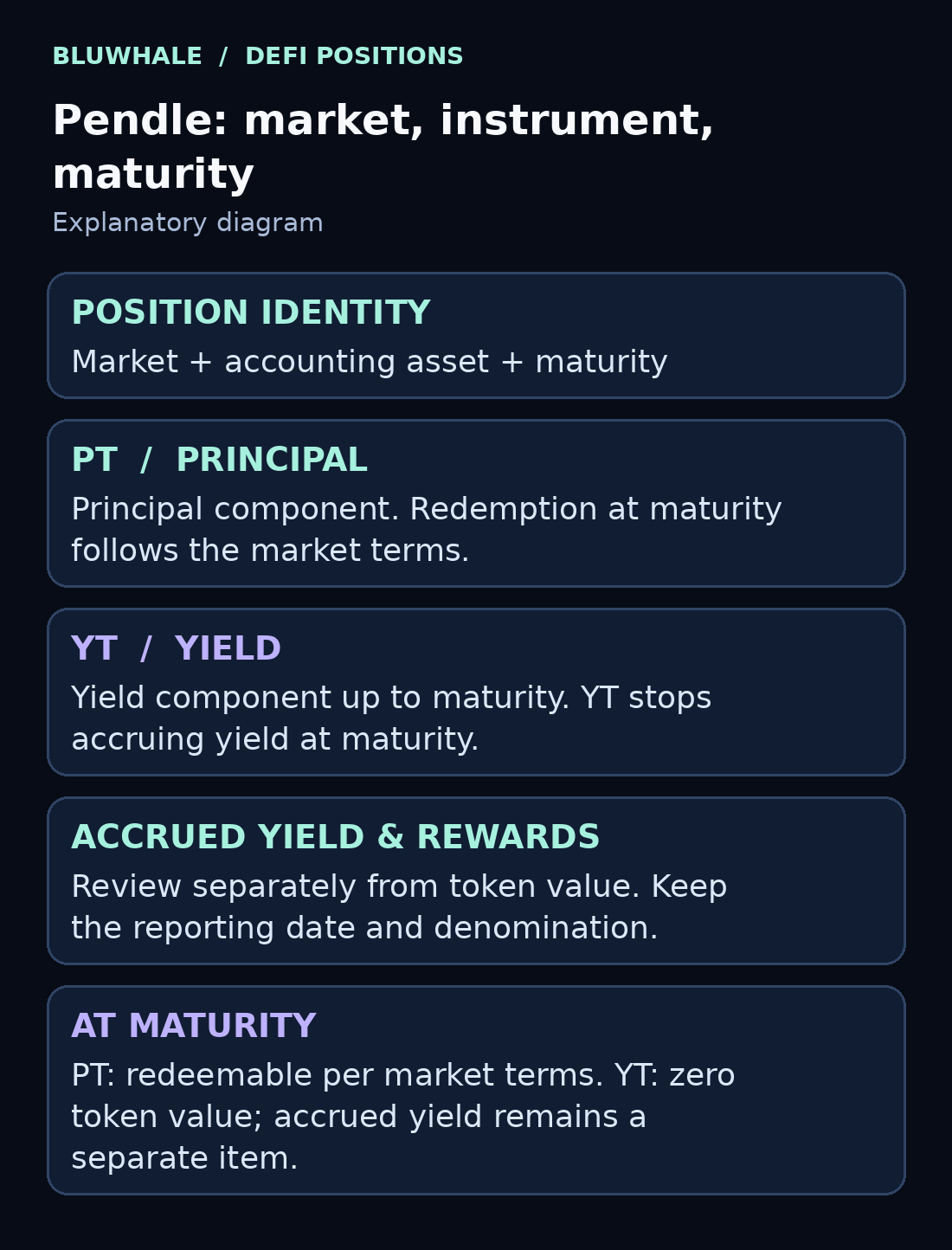
Keep Pendle PT and YT distinct
Principal Token, or PT, represents the principal component. Pendle specifies redemption at maturity in relation to the market’s accounting asset. Yield Token, or YT, represents the yield component up to maturity. These instruments serve different roles in a position review; a PT holding and a YT holding should therefore remain separate.
For a Pendle portfolio tracker, the distinction also helps with valuation. Your PT quantity, its current market value and its maturity terms describe different aspects of the holding. For YT, the value of the token and the yield earned over time also belong in separate parts of the review. Keep the measures clear so each figure has an understandable purpose.
Pendle’s PT and YT documentation provides the protocol definitions.
Make market identity and maturity easy to read
Pendle market maturity is part of the instrument’s identity. Keep it alongside the market name when reviewing the position, rather than leaving it as a detail to look up later. This helps distinguish holdings linked to the same asset but different markets or dates.
The accounting asset also matters. Pendle identifies it in the market name and terms. PT redemption is defined against that asset, which can differ from the yield-bearing token used by the market. Use the market’s own label when describing your holding.
In this Pendle portfolio tracker workflow, bring the address, network, instrument and maturity together for your Bluwhale review. That creates a focused portfolio task: understand the position you hold today and the date that defines its next stage.
Read position value and accrued rewards separately
In a Pendle portfolio tracker, a token’s value and accrued rewards describe different parts of the holding. Keeping them separate makes the review easier to read and helps you understand what contributes to the position. Use the same reporting date when comparing values, and keep the denomination attached to each amount.
Keep Pendle accrued rewards separate from the token’s value. For YT, yield accrues up to maturity. Pendle explains that earned yield and rewards can be claimed through its dashboard. That protocol record provides the reference for the accrued component; Bluwhale provides the wider financial profile and agent environment around your position review.
This structure works well for a regular portfolio check: identify what you hold, distinguish the instrument from its accrued component and connect the result with your other crypto assets. It keeps the review focused without turning it into a general search for the highest yield.
Understand the role of maturity
At maturity, the principal and yield components reach different stages. PT becomes redeemable according to its market terms. YT stops generating further yield and has zero token value at maturity; previously accrued yield remains a separate item to consider. Keep that distinction with the position when you revisit the market.
Keep the maturity date visible in your Pendle portfolio tracker, alongside the instrument and its role in your portfolio. This is about understanding a holding you already have. The same clear structure helps you compare your records from one review period with the next.
A Pendle portfolio tracker should preserve the differences between instruments, rather than compressing every holding into one balance. Keep each market’s asset and maturity attached to the PT or YT quantity, then read current value and earned components in their own lines. In Bluwhale, that structure makes Pendle positions easier to relate to the rest of your portfolio without losing the role of each instrument.
Connect Pendle with your wider Bluwhale profile
Your Pendle holding sits alongside the rest of your money. Bluwhale brings wallets, exchanges and bank accounts into a unified financial experience, with WhaleScore and Financial Age to help you explore your broader financial profile. Move from the specific holding to the dashboard and specialist agents when you want to continue your review.
Explore the Bluwhale DeFi portfolio tracker for the wider product view. If your portfolio also includes liquidity positions, the Uniswap V3 position review offers another focused way to examine a different instrument within the same financial routine.
Review this position in Bluwhale
Pendle portfolio tracker questions
Which asset does Pendle PT refer to at maturity?
PT refers to the accounting asset specified for its Pendle market, including the redemption terms at maturity. Bluwhale’s Pendle portfolio tracker review keeps that exact asset label with the holding, because it may differ from the yield-bearing token used by the market. Bring the market name, asset and maturity together when discussing the position so the principal component remains identifiable within your wider portfolio.
What happens to Pendle YT at maturity?
YT stops generating further yield at maturity and has zero token value at that point; previously accrued yield remains a separate item. When using a Pendle portfolio tracker in Bluwhale, keep the matured token distinct from earned components. Use Pendle’s own dashboard as the protocol reference for claimable amounts, then connect the holding and its timing with the wider financial profile you are reviewing.
Where do I review a Pendle position in Bluwhale?
Open Cross-Chain Portfolio in Bluwhale with your public address, network and market details to begin the Pendle portfolio tracker review. Identify whether you hold PT, YT or another position associated with the market, then focus on the aspect you want to understand. Continue into the financial dashboard for your broader profile, WhaleScore, Financial Age and the specialist agents relevant to your next task.
What inputs should I bring to a Pendle portfolio tracker?
Bring the public address, network, market identity, instrument, accounting asset and maturity date. Bluwhale’s wallet analysis starts with the address and network, while those Pendle details define the position-specific question. Keep token quantity, current value and accrued components separate in the conversation, so each figure describes an understandable part of the holding you actually own.
Why should Pendle PT, YT and accrued rewards be kept separate?
PT, YT and accrued rewards describe different claims or components, so separate lines make the financial meaning easier to follow. Bluwhale helps you frame that review around a specific Pendle market rather than grouping everything under one familiar asset name. Keep the denomination and reporting date with each figure, then use the agent conversation to relate those components to the rest of your portfolio.
How does Bluwhale connect Pendle positions with my wider finances?
Bluwhale connects a focused Pendle review with a financial profile containing wallets, exchanges and bank accounts, alongside indicators such as WhaleScore and Financial Age. Use the Bluwhale DeFi portfolio tracker for the wider positions workflow, then choose another financial agent when your question changes. That gives the market-specific analysis a practical next step without losing the identity or maturity of the instrument you started with.