


Understand your Morpho vault position with Bluwhale and connect it to the rest of your financial picture. A Morpho vault tracker workflow becomes more useful when you can read the position, underlying asset and role in your portfolio together. Bluwhale brings AI wallet analysis and specialist financial agents into a unified experience, so you can move from an individual DeFi holding to a broader view of your finances.
Start the Morpho vault tracker review in Cross-Chain Portfolio with the public address and network for your position. Focus the review on the Morpho vault you use, then explore the holdings and financial context that matter to you.
Review this position in Bluwhale
Morpho vault tracker inputs: identify your position
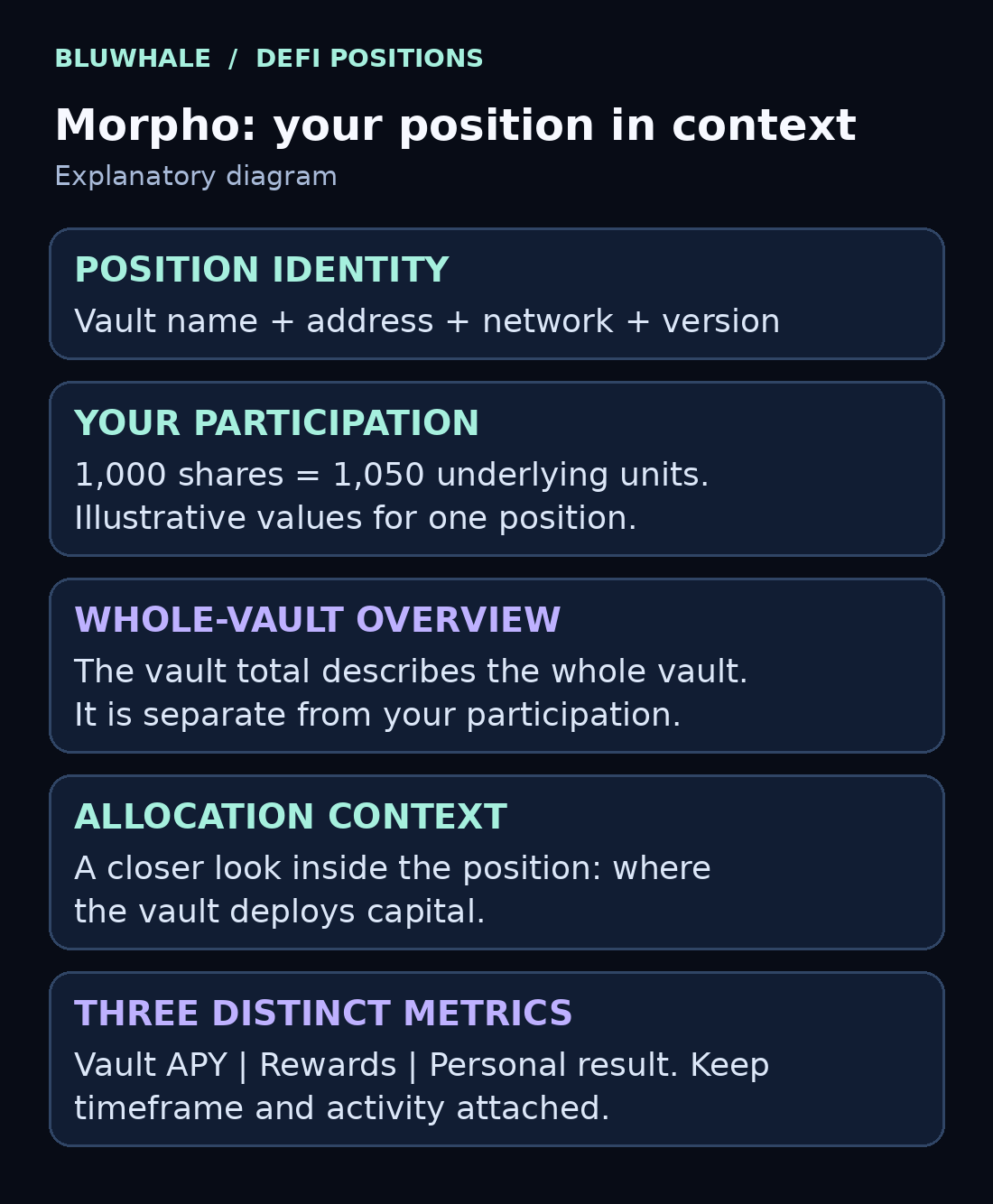
When reviewing Morpho vault positions, keep the vault name, address, network and version together. Those details give a Morpho vault tracker a clear subject and make the position easier to follow as you move between wallet and portfolio research. They are especially useful when similar asset names appear across several products or networks.
Use the Morpho vault tracker workflow in Bluwhale to focus that context on your own participation. The useful question is how the holding fits into your finances: the asset you have deployed, the size of your position and the other holdings around it. Keeping that focus makes the review practical and gives each follow-up a clear purpose.
Read shares as an underlying asset value
Morpho vault shares represent your participation in the vault. Their corresponding asset amount gives you another way to understand the holding. The vault’s total assets describe the whole vault; your position describes your own participation. The ERC-4626 vault standard provides this distinction between shares and the underlying asset.
For a simple illustrative example, imagine 1,000 shares corresponding to 1,050 units of an underlying asset. The 1,000 figure identifies the shares; 1,050 expresses Morpho position value in units of the underlying asset. These fictional values explain the relationship. In your Bluwhale review, use that distinction to keep the holding understandable and connected to the currency or asset perspective you use for the rest of your portfolio.
Understand the exposure behind one position
The allocation behind a Morpho vault adds context to the position. It helps explain where the vault deploys capital, while your own holding remains the participation you are reviewing. In a Morpho vault tracker, use the allocation as a closer look inside the position rather than as a second collection of assets to add to your wallet balance.
That distinction gives your Bluwhale portfolio research a cleaner structure: the position is the holding, and its allocation explains the exposure behind it. You can then focus on what matters to your wider finances, such as the relationship between this deployed asset, directly held tokens and other DeFi positions. A clear structure makes the overview easier to read.
Keep the vault rate and your personal result clear
A published vault APY, a rewards figure and your own investment result each describe a different part of the picture. Morpho documents vault rates and rewards as distinct data, alongside user-position and earnings information. Keep those labels clear as you explore the holding in Bluwhale.
Your own timeframe matters when using a Morpho vault tracker. Deposits, withdrawals and the period you held the position help explain the result you experienced. Use the vault rate as context for the product, then keep your own history attached to the question about performance. This makes it easier to compare the position with your original financial objective and the other assets in your portfolio.
A Morpho vault tracker should keep your participation distinct from the vault as a whole. Start with the Morpho vault shares held by the address, then interpret the corresponding underlying asset amount before comparing it with the wider portfolio. In Bluwhale, keep that holding connected to the objective of your review, whether you are examining asset exposure, position size or the relationship with another DeFi holding.
Connect your vault with the wider portfolio
A Morpho position is one part of your finances. Bluwhale brings banks, wallets and exchange accounts into a unified financial profile, with financial agents for different tasks. That wider view gives the vault review a useful destination: understanding how one deployed asset sits alongside the rest of your financial activity.
Use the Bluwhale DeFi portfolio tracker to explore that broader context. Keep wallet balances, protocol positions and liabilities organized by their role. You can concentrate on the vault today, then explore another holding or financial question without losing sight of the bigger picture. Bluwhale connects the specific position with a financial experience built around your wider needs.
Review your Morpho position with Bluwhale
Open Cross-Chain Portfolio and focus the Morpho vault tracker review on the position you want to understand. Bring the public address, network and vault identity, then explore your participation and the financial context around it. Move from shares and underlying value to a clearer view of the holding in your portfolio. Bluwhale gives your DeFi research a direct connection to the rest of your finances.
Review this position in Bluwhale
Morpho vault tracker questions
Is the Morpho vault total the same as my position value?
No. The vault total describes assets managed across the vault, while your position describes your own participation. In Bluwhale, a Morpho vault tracker review keeps those two views separate before connecting the holding with the rest of your finances. Use your shares and the corresponding underlying asset amount to identify the position you actually hold, rather than treating the vault’s entire capital as your wallet balance.
Does a displayed Morpho vault APY equal my personal return?
No. A displayed vault APY is a rate for the vault; your personal result depends on your position, timing and activity. When using a Morpho vault tracker in Bluwhale, keep the rate, rewards and your own history clearly labelled. Bring the relevant deposits, withdrawals and review period into the conversation so the holding can be understood in relation to your financial objective and other assets.
What should I bring to a Morpho position review in Bluwhale?
Bring the public wallet address and network, plus the Morpho vault name or address and version. Bluwhale’s Cross-Chain Portfolio uses the public address and network to frame wallet analysis; the vault identity makes the research specific to your position. Start with the holding you want to understand, then connect its shares, underlying value or asset exposure to the wider DeFi and financial question you are reviewing.
What does a Morpho vault tracker help me distinguish?
The useful distinction is between your share quantity, its corresponding underlying asset amount and the whole-vault context around that position. In Bluwhale, keep those measures attached to the same vault and observation period. The fictional 1,000-share and 1,050-underlying-unit example in this article illustrates how two different units can describe the same participation, giving your review a clear starting point for wider portfolio analysis.
How should I use Morpho vault allocation in my Bluwhale review?
Use the vault allocation as context for the exposure behind your holding, rather than as another set of assets to add to your wallet balance. Bluwhale’s Morpho vault tracker approach keeps the position itself identifiable while you explore how the vault deploys capital. Relate that exposure to directly held tokens or other DeFi positions when it helps answer the financial question you are researching.
Where can I continue in Bluwhale after reviewing a Morpho vault position?
Continue with the Bluwhale DeFi portfolio tracker to place the vault alongside your other protocol positions and wallet assets. Bluwhale brings connected financial information and specialist agents into a wider profile, so one vault can be reviewed in relation to the rest of your money. Open the financial dashboard for broader context or choose another agent when your next task extends beyond the holding.